Transfer Station Info (Tip Fee $113.00/ton)
- Mt. Olive Mon-Fri 7:30am-3pm; Sat 7:30am-11am
- Parsippany Mon-Fri 7am-3pm; Sat 7:30am-11am
- No Rental Trucks
- Payment by Account, Check, Credit Card. No Cash
- Home
Morris County's
Environmental Resource
Welcome to the Morris County Municipal Utilities Authority's (MCMUA) website; MCMUA.com. The MCMUA Solid Waste Division implements recycling, solid and hazardous waste programs throughout Morris County. The MCMUA Water Division sells drinking water to several municipalities and water companies. The MCMUA is Morris County's environmental resource.
- Solid Waste
 Recycling
Coordinating and running recycling programs throughout Morris County. Garbage Disposal
Two transfer stations handle the disposal needs of Morris County. Collection Service
Residential, commercial and institutional recycling pickup Hazardous Waste
Managing household hazardous and eligible business waste. Compost Providing compost and mulch made from Morris County's vegetative waste
 Clean
Clean
Communities
Anti-Litter Programs Waste
Waste
Reduction Reuse Solid Waste
Planning Facility Inclusions Towns
Towns
Municipal Information - Water
 Water System
Wholesale drinking water provider.
Water System
Wholesale drinking water provider. Water Quality Keeping our water clean - Drinking water quality reports.
 Conservation Saving water because it is a valuable resource in so many ways.
 Education Resources to help learn about water and how to use it wisely.
 Open Space MCMUA working with Morris County to preserve open space
 - About the MCMUA
 Contacts
MCMUA board members, staff and more Directions
Maps, locations and directions to MCMUA facilities Public Disclosure
Information for the public we serve Current Legal Notices/Bids
Public Notices, Bids, RFPs, Quotes

Morris County
Municipal Utilties Authority
Transfer Station Info (Tip Fee $113.00/ton)
- Mt. Olive Mon-Fri 7:30am-3pm; Sat 7:30am-11am
- Parsippany Mon-Fri 7am-3pm; Sat 7:30am-11am
- No Rental Trucks
- Payment by Account, Check, Credit Card. No Cash
F.A.Q. Home Medical Waste
The MCMUA operates one of NJ's most comprehensive household hazardous waste (HHW) programs. This F.A.Q. page and information on hazardous materials is intended as a guide about HHW materials as well as the MCMUA's HHW program. This information is a general guide and does not constitute official rule, regulation or law.
Hazardous Waste Materials
- Adhesives
- Aerosols
- Antifreeze
- Appliances (CFCs)
- Art & Crafts
- Asbestos
- Batteries (Auto & Boat)
- Batteries, Household (dry cell)
- Cell Phones
- Compressed Gas Cylinders
- Driveway Sealer
- Electronics
- Fire Extinguishers
- Fluorescents
- Gasoline
- Medical Waste
- Kerosene
- Mercury
- Motor Oil & Filters
- Muriatic Acid (HCl)
- Paints & Stains
- Pesticides
- Photo Chemicals
- Pool Chemicals
- Propane
- Rock Salt
- Smoke Detectors
- Solvents
- Wood with Lead Paint
Hazards
- May infect other people who come in contact with trash.
- Unwanted or expired medicines or pharmaceuticals could be harmful to children or adults. Unused pharmaceuticals found in the trash may be stolen for unregulated use.
-
Antibiotics poured down the drain can kill beneficial microbes and bacteria in septic systems.
Handling
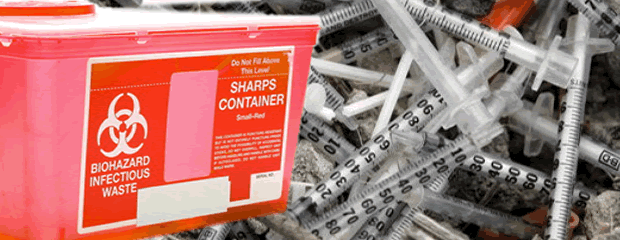
- Keep sharp objects such as needles, syringes, and lancelets in secure containers out of the reach of children. Do not use glass.
-
Click here for Morris County specific issues related to medical waste.
Management Options
-
Once a prescription has been issued, the pharmacy cannot take it back. Periodic prescription medicine disposal
programs are run by the:
-
Morris County Sheriff's Office - Prescription Drug Drop Box Program
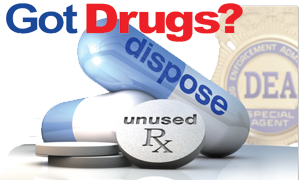
Dispose of prescription drugs safely and bring unused or expired prescription drugs to participating Morris County towns. The Morris County Sheriff’s Medical Collection Unit was started in 2013. A designated municipal police officer and a Sheriff’s Officer collect the medications from the locked boxes that are kept in the lobbies of the local municipal police departments where people discard medications in a safe and secure location. This program is for residents only. Doctors’ offices, pharmacies, and other medical institutions must dispose of drugs via FDA/DEA guidelines. - USDEA typically holds National Prescription Drug Take-Back Days in April. Go to their website to see announcements of new programs and to view a listing of Morris County drop-off locations. Locations are usually publicized and available about one month prior to the collection day. The National Prescription Drug Take-Back Day aims to provide a safe, convenient, and responsible means of disposing of prescription drugs, while also educating the general public about the potential for abuse of medications.
-
Morris County Sheriff's Office - Prescription Drug Drop Box Program
- Project Medicine Drop (click here) is coordinated through the NJ Div of Consumer Affairs and provides the opportunity to discard unused prescription medications every day throughout the year. The participating police agencies maintain custody of the deposited drugs, and dispose of them according to their normal procedures for the custody and destruction of controlled dangerous substances. They report the quantity of discarded drugs to the Division of Consumer Affairs on a quarterly basis. The Division expanded the program in 2012, to include police departments in each of New Jersey's 21 counties.

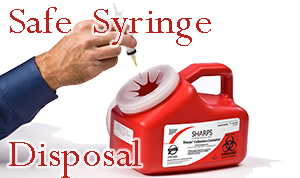
Safe Syringe Disposal Programs in Morris County
-
St. Clare's Hospital
(Dover and Denville Campuses)
Just drop off syringes at the front desk, but they must be in a sealed, hardened container. -
Morristown Medical Center
973-971-4177 - Containers for syringes can be picked up or dropped off at the outpatient desk located on the right after going into the main entrance. Hours are M-F, 7:00am-7:00pm and Saturdays 7:00am-3:00pm. Syringes must be empty and syringe containers cannot be more than 3/4s full. -
Chilton Memorial Hospital 973-831-5010 - Containers for syringes can be picked up or dropped off at the
Access Center located on the right after going into the main entrance. Hours are M-F, 6:00am-5:00pm and Saturdays 7:00am-12:00pm.
Syringes must be empty and syringe containers cannot be more than 3/4s full.
-
Note: in addition accepting sharps and/or syringes for disposal,these safe syringe disposal programs will also accept
epipens for disposal as longs as they are empty and packaged in hardened containers like sharps and syringes.
First Dispense the medicine inside the EpiPen into a potato or apple.
Next, throw the potato or apple in the trash
Finally, place the empty EpiPen in a safe syringe disposal container for disposal through the safe syringe program.
Additional information about the Safe Syringe Disposal Program maybe obtained by contacting:
- MedPro Disposal- Provides reliable, cost-effective biohazard waste removal, pharmaceutical destruction and OSHA compliance training services to healthcare providers throughout the US. Interested parties can call MedPro Disposal for prices & details at 886-641-6131.
- Waste Management, a waste hauling company has a “Sharps Disposal by Mail” program. Participants are provided with an approved disposal container and mail full containers for disposal using US Postal Service. Interested parties can call Waste Management for prices & details at 877-WASTE-MD.